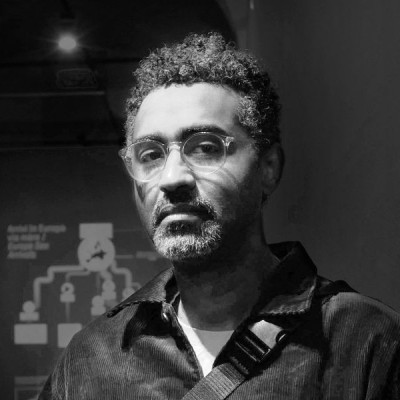
Sudanese political cartoonist, artist, and cultural activist Khalid Albaih is known worldwide for his drawings published under the name Khartoon!—an ironic and sharp portmanteau combining Khartoum (the Sudanese city where Albaih grew up), the English word “cartoon,” and the artist’s own name. His images—minimal, incisive, and often wordless—have circulated globally during pivotal political moments, from the Arab Spring to the Sudanese revolution.
Alongside his practice as a cartoonist, Albaih has developed editorial and artistic projects that explore history, memory, and political narratives, including the collective volume Sudan Retold (Hirnkost, 2019), co-authored with Larissa-Diana Fuhrmann. For wetlands, Khalid Albaih created the graphic novel Zugag: Diary of a Professional Foreigner (wetlands, 2026), published in Italy on March 13 and part of the Afterwords series. For this interview, we invited him to respond not only with words, but also—whenever possible—with his own drawings.
Beginnings. When did you first realize that drawing political cartoons could be your language? At what age did you start drawing?
I don’t remember a moment where I decided to draw political cartoons. It was already there.
I drew as a non-sporty kid in Sudan. I drew when I missed my father while he was in political prison. I drew when he left the country. I drew when my family settled in Doha.
I kept drawing when I discovered political cartooning. It gave me a way to understand how drawing could speak about real issues. I kept drawing when I studied design, when drawing became not just expression, but function. I continued drawing through frustration as a young adult, watching others like me trying to push for change, each in their own way. Some marched. Some wrote. I drew.
I still draw now, as a parent.
It was never a decision. It’s a language. One that helped me understand what was happening around me, and somehow reach others, in different parts of the world, trying to understand the same things.
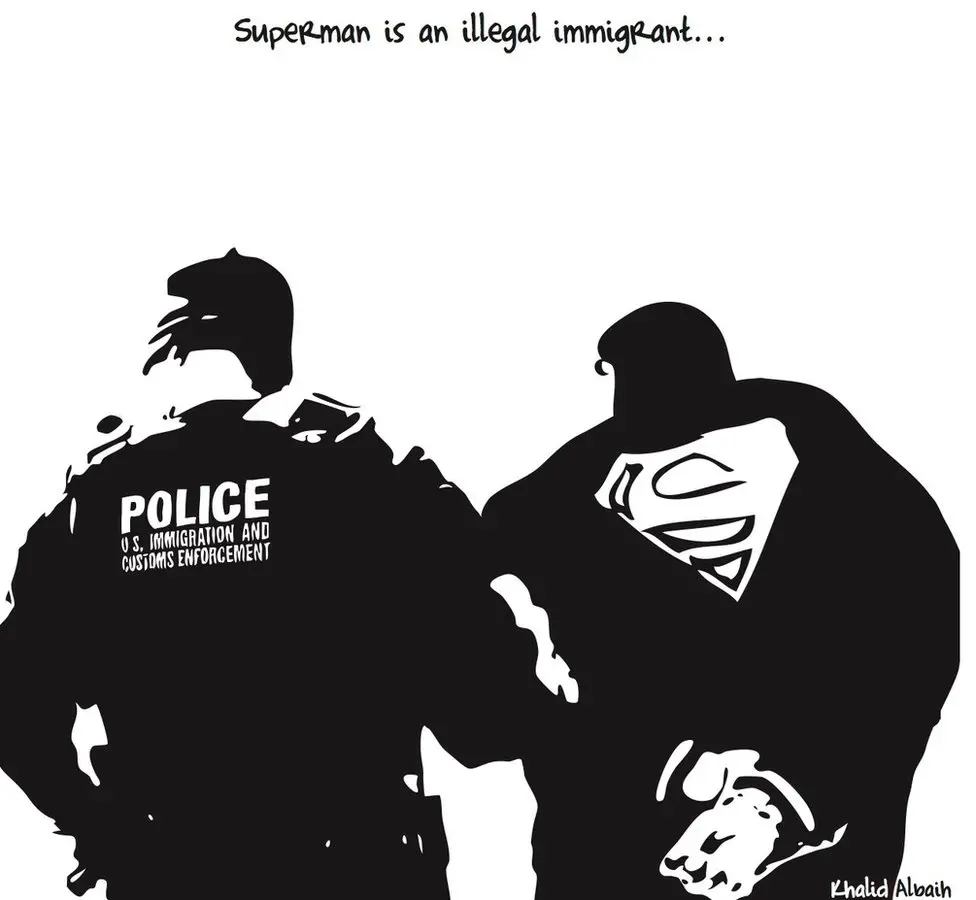
Diaspora. You were born in Bucharest and grew up in Doha as part of the Sudanese diaspora. How did growing up between places shape the way you look at politics?
Being Sudanese in Doha, born in Bucharest, you’re always slightly out of place. You learn to read the room quickly. What can be said here. What can’t. What people assume about you before you speak.
Politics, for me, was never tied to one country. It was a pattern. You start to see the same structures repeat themselves—power, control, erasure—just with different accents. And I was, almost always, the other. Distance changes how you witness things. You’re not fully inside, but not outside either. You’re watching your country through news, through fragments you try to piece together. That distance sharpens certain things and makes you miss others.
I also grew up online. At a time when that space felt open, shaped by people who believed in shared knowledge and some idea of a common humanity.
That changed.
Now the same space reflects the same borders, fears, and exclusions.
So in a way, I became diaspora twice.
Offline, and online.
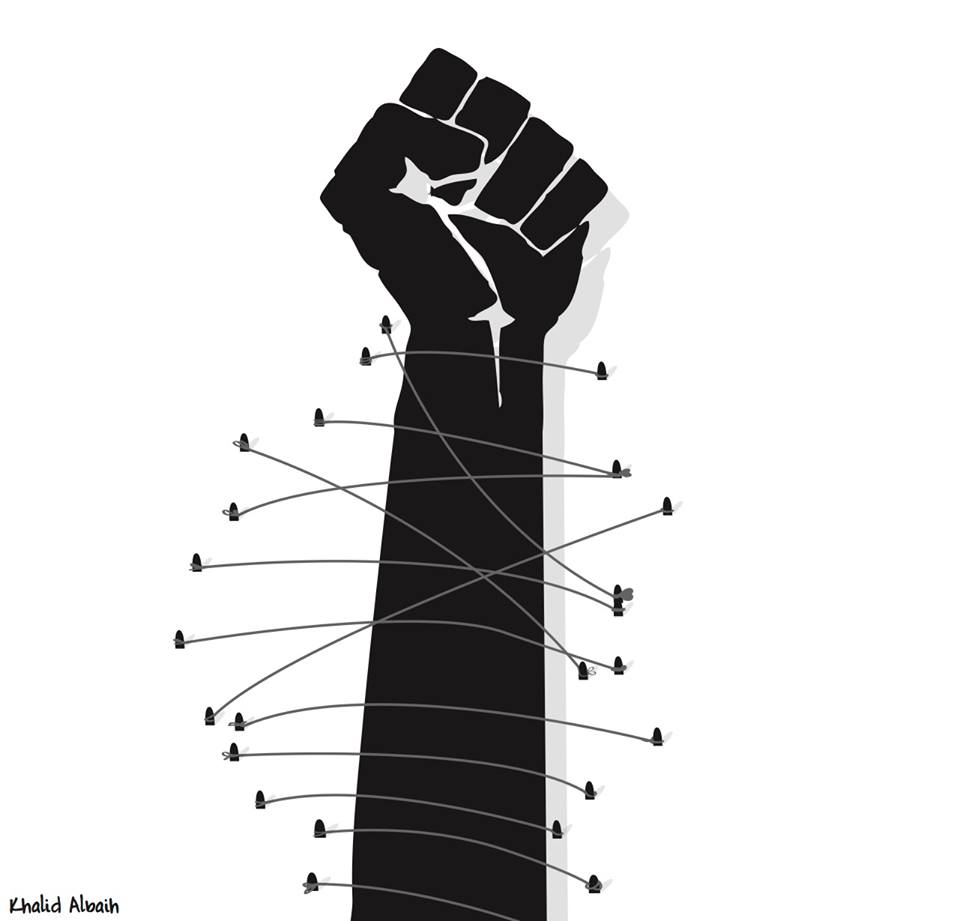
Khartoon! Come nasce l’idea di pubblicare le tue vignette online con il nome Khartoon!? Come hai scelto questo medium?
The name came naturally. Khartoum + cartoon + Khalid. At the beginning, it also helped me stay anonymous, for safety reasons. That didn’t last long.
It tied the work to where it comes from, while allowing it to travel. A name that could exist beyond me. I always felt it could grow into something bigger than just my drawings.
That’s what it became.
Today, Khartoon is also a platform. A magazine for displaced Sudanese cartoonists after the war, creating space for them to continue working independently, without being pushed into propaganda to survive. It’s been running for four years now.
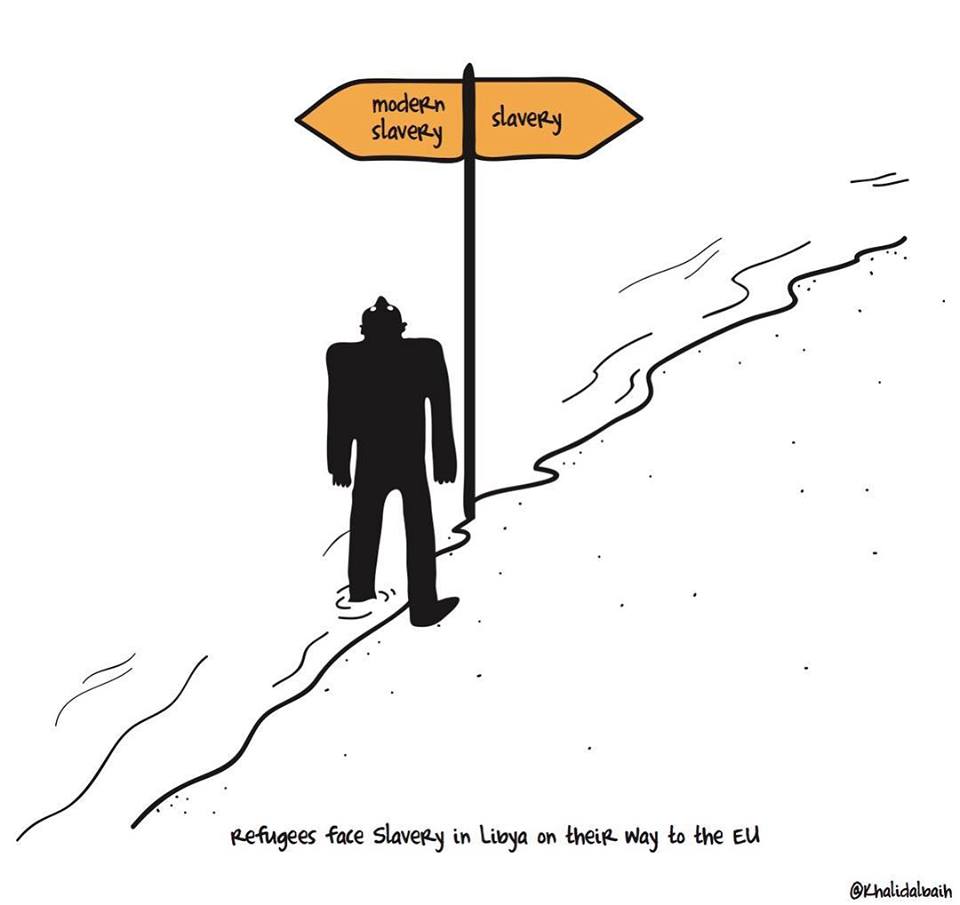
Cartoons and revolution. Your drawings circulated widely during moments of protest and political change. What role can cartoons play during times of revolution?
Cartoons are a form of resistance, they don’t lead to revolutions. They are part of the structure that moves with people and reflects the feeling of the moment. Satire punches up. It doesn’t replace organizing.
A cartoon simplifies without reducing. It can say something clearly, sometimes more clearly than a long article or a speech—but it doesn’t replace it. And because it’s visual, it travels quickly, across languages and borders.
Since I started drawing in 2008, I’ve seen how Khartoons move across the world. Not just online. Printed, carried, reposted, remixed. It becomes solidarity, a reminder that these struggles are connected. But there’s also a limit.
It doesn’t protect people on the ground.
It doesn’t win a battle where lives are at stake.
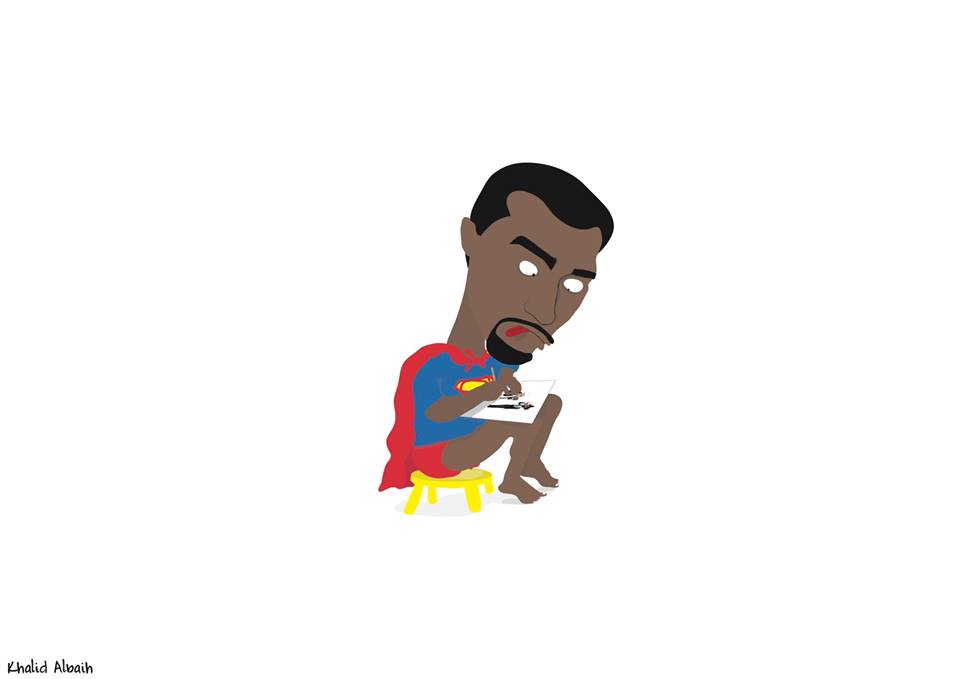
Images that travel. Your cartoons often travel far beyond their original context. Is there one drawing whose circulation surprised you the most?
I’m still as surprised today as I was the first time I saw a cartoon I made about the Egyptian revolution stencilled in Beirut and Tahrir Square. Or when I saw a drawing used by an ISIS fighter in Syria.
The meaning shifts depending on who holds it.
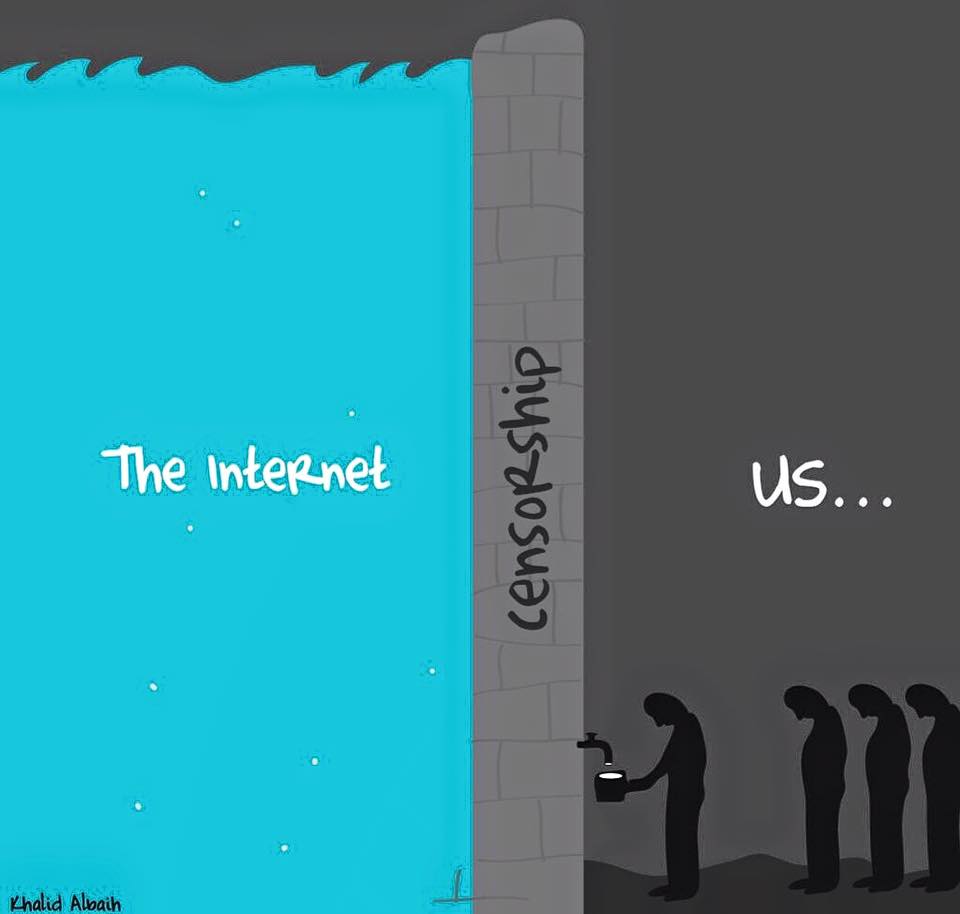
What allows it to move is not just the drawing itself, but the space it enters. The internet, at the time, made that possible. Before algorithms, profit, and censorship took over.
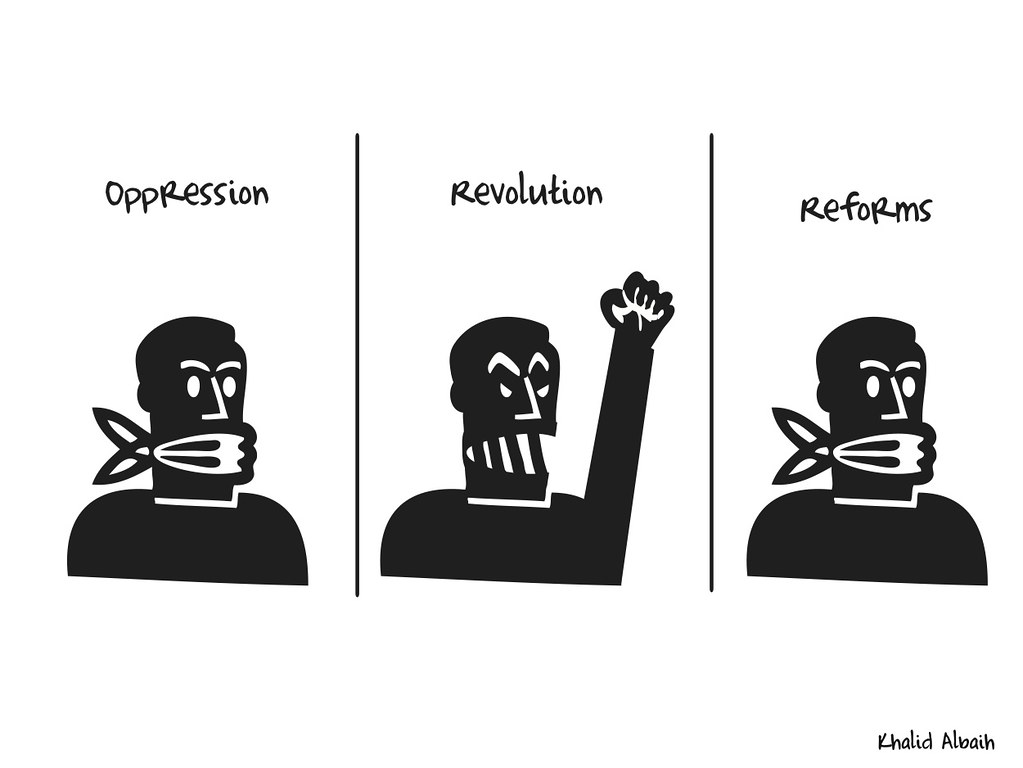
Media today. How do you relate to today’s media landscape? How do you stay informed, and what fascinates, or frustrates, you about the way images circulate online today?
I stay informed the same way I always have. Multiple sources. Conversations. Following people on the ground. Trying to read between what is shown and what is missing.
How do I relate to the media landscape today? I see myself as both a citizen journalist and an artist. My work is a response to that landscape.
What fascinates me is still the speed. How quickly an image can move, and how it can shape a moment.
What frustrates me is how that moment is now manufactured and controlled to push agendas and shift public opinion. It’s not new—newspapers did this before—but now it’s global, constant, and much faster.
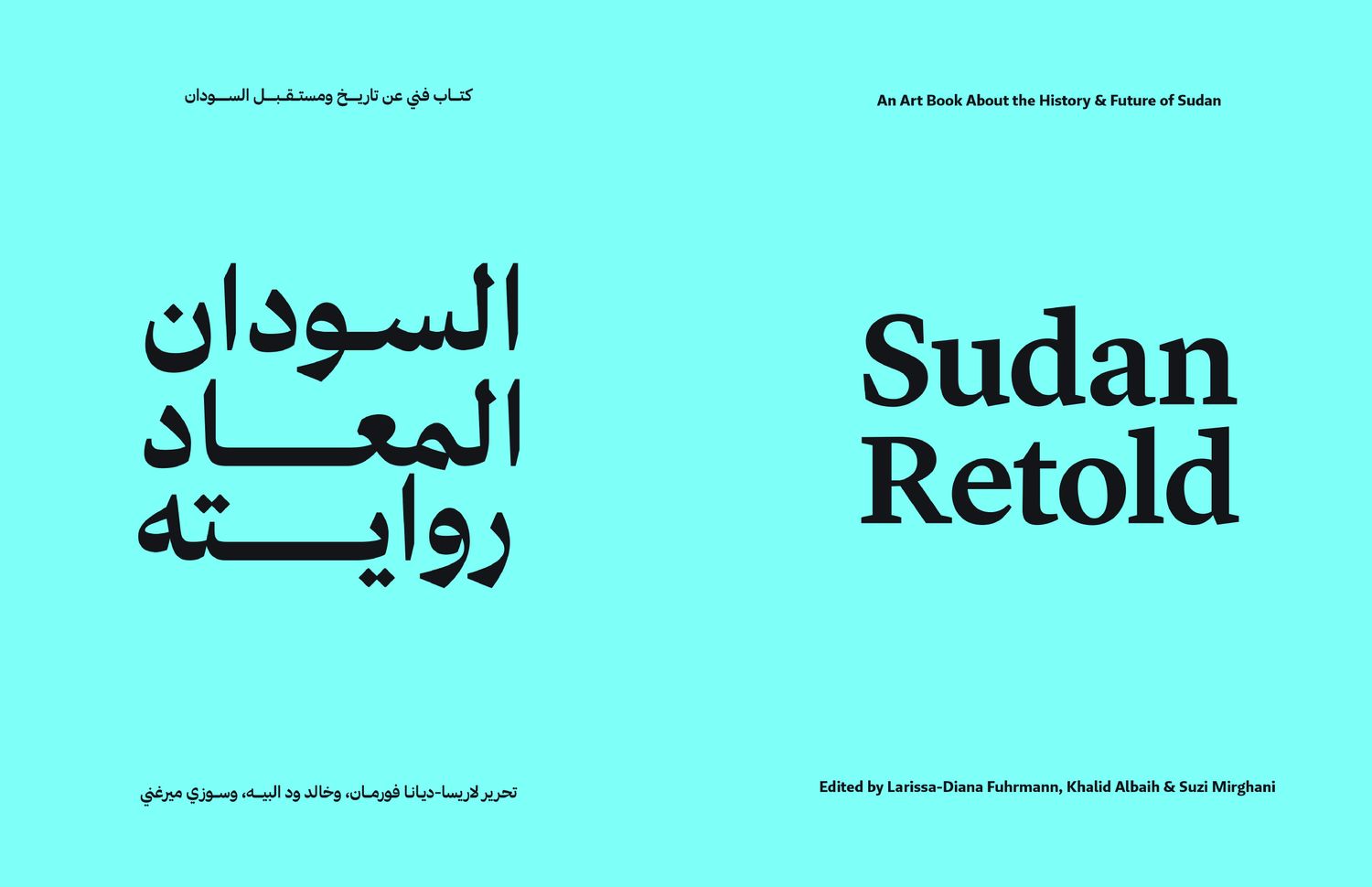
Sudan Retold. Your book Sudan Retold tells the history of Sudan through art and storytelling. What inspired you to start this project?
I always wanted to make a graphic novel about the history of Sudan. But I realized it would only reflect my version of that history. So I invited others to present theirs. Then I didn’t want to limit it to comics, so it became a broader artistic narrative of history.
Not a single narrative, but a collection. Different voices, different styles, building a fragmented history. One that reflects how we actually experience it.
It was also about access. Using comics and illustration to reach people who might not engage with academic texts or official histories.
Venice and Zugag. Your graphic novel Zugag reflects on cities, memory, and everyday life. During your time in Venice, you found parallels with other important cities and places in Sudan, can you tell us more about this?
Zugag is a diary of my time getting lost in Venice during my Wetlands residency.
I spent a lot of time moving without a plan. Getting lost, following routes that led nowhere. For a moment, I got close to what it means to be local. Something I value deeply, after spending most of my life as “the foreigner.” So wherever I go, I look for similarities. Even if they only exist in my head. A way to convince myself it’s possible to be local anywhere, even if you’re a foreigner everywhere.
Venice is often seen as a finished image. Preserved. Almost frozen. In a very different way, Sudan feels the same.
It was also a difficult moment. Sudan, a country I spent years hoping to see move forward after the revolution, went backward into another war. Now it feels like it’s disappearing.
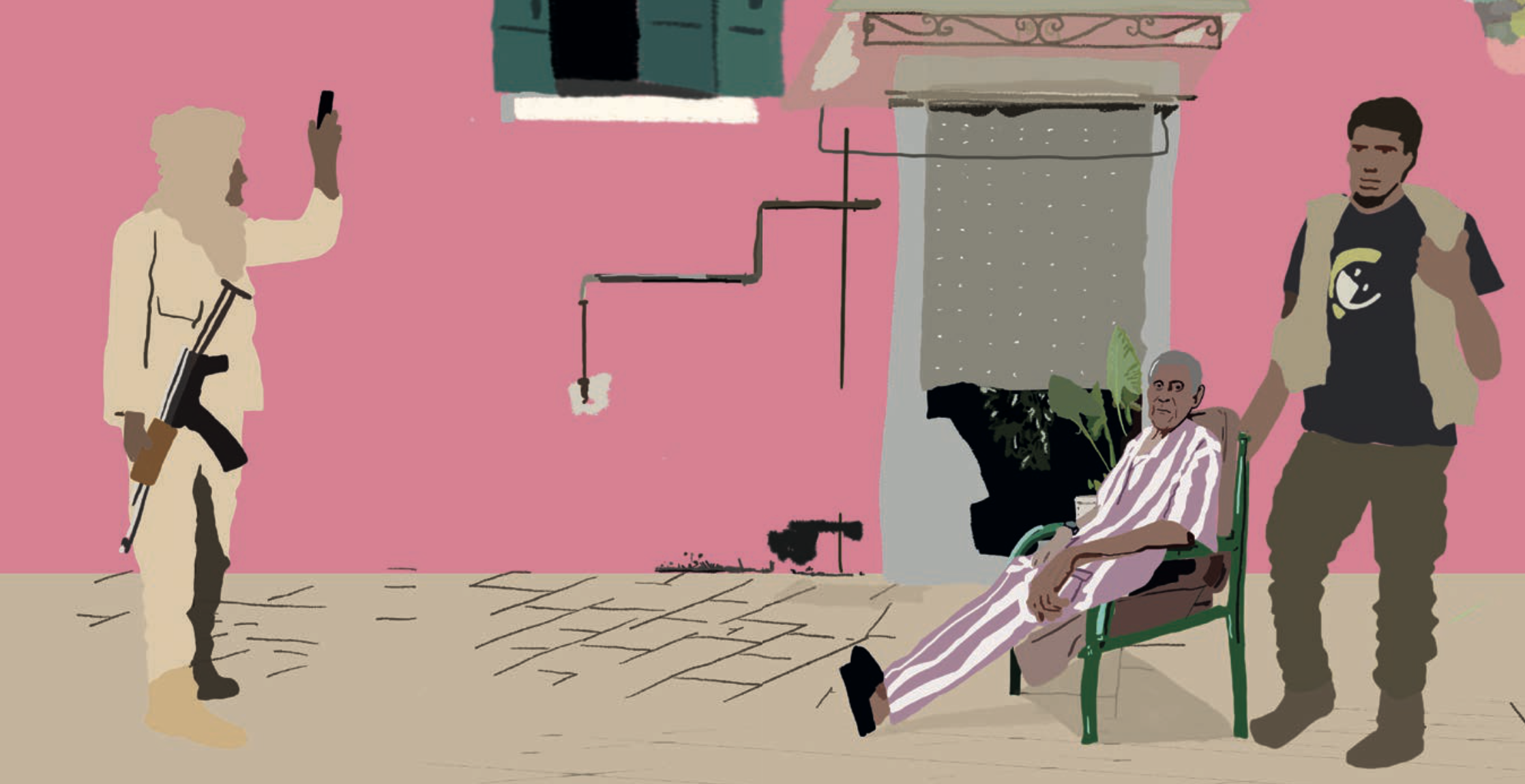
The latest drawing. What is the most recent cartoon you have drawn? Could you share it with us?
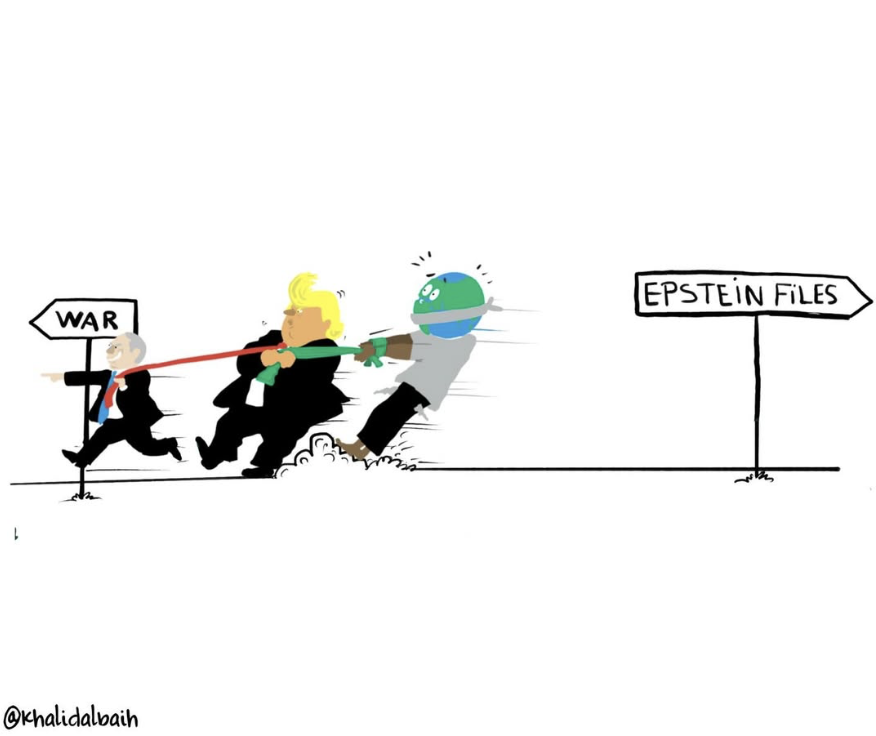
The most recent drawing is about the war on Iran, and how it unfolded in the middle of everything else.
It came from watching how quickly attention shifted. One moment it was the Epstein files, questions, pressure, accountability. Then suddenly, war.